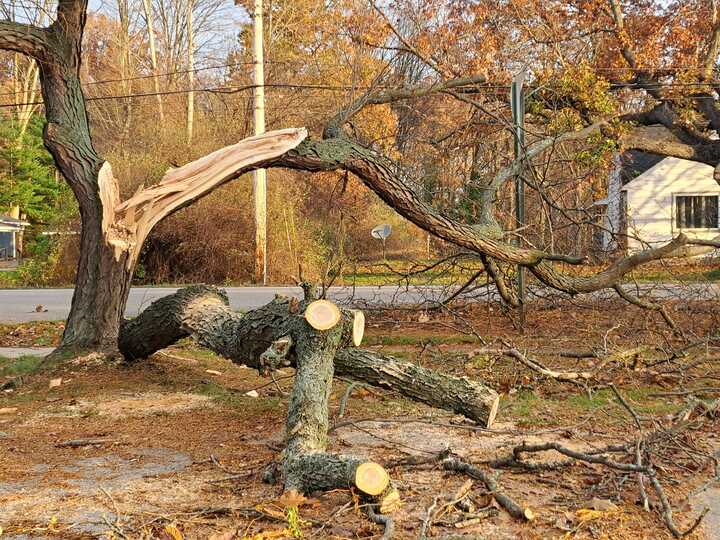
When emergency removal makes sense
Emergency tree removal is different from routine tree work. The concern is whether the current condition could cause more damage before a normal appointment. In Idaho Falls, that often means a tree split during a wind event, a heavy limb hanging over a roof after wet snow, a partially uprooted tree leaning toward a fence after saturated soil, or a trunk that shifted after late-frost damage.
Calls also come in when a tree blocks a driveway, traps a vehicle, lands on a fence, drops heavy limbs across a walkway, or leaves branches pressing into a roofline or gutter run. Aging cottonwoods near the Snake River corridor, brittle limbs on mature blue spruce, and ash trees showing decline can all become urgent when wind, ice, or heavy snow exposes a weak point.
Wind, ice, and snow-load damage scenarios
Eastern Idaho weather can shift quickly between wind events, late frost, freezing rain, and heavy wet snow. The National Weather Service forecast office in Pocatello covers Idaho Falls and the surrounding Snake River Plain, and after these events common emergency calls include split trunks, hanging limbs, partially uprooted root plates, and trees leaning toward roofs, walls, or fences.
Common scenarios include split trunks, hanging limbs, uprooted root plates, trees leaning into roofs or fences, branches resting on garages, and debris that blocks access after a storm. If the tree is near a power line, do not inspect it closely or attempt cleanup yourself. Treat the area as unsafe and contact your utility first.
Common emergency tree calls in Idaho Falls
Typical urgent calls include a driveway-blocking cottonwood after a wind event, heavy limbs on garages or carports after wet snow, partial blue spruce uprooting near fences in older neighborhoods, and dead ash limbs dropping after late-frost damage. Homeowners also call when branches press into siding, fences are crushed, access gates cannot open, or a tree shifts toward a roof after a storm. The first goal is to make the property safer and reachable, then sort out cleanup, stump grinding, and follow-up trimming.
Can a wind- or snow-damaged tree be saved?
Sometimes a damaged tree can be pruned or monitored instead of removed. That is more likely when damage is limited to smaller limbs, the trunk is sound, the root plate has not lifted, and the remaining canopy can be balanced without over-thinning the tree heading into the next dry summer.
Removal becomes more likely when the trunk is split, the tree is partially uprooted, major scaffold limbs have failed, decay is visible, the tree leans toward a home, or the remaining structure cannot be made safe. A careful emergency assessment should separate immediate hazard reduction from follow-up pruning, stump grinding, or cleanup.
Emergency tree removal cost factors
Emergency pricing depends on size and complexity. Height, trunk diameter, access through gates and outbuildings, slope, brittle wood, and proximity to roofs, fences, vehicles, or service drops all matter. Large cottonwoods and mature blue spruce usually require more planning than small ornamental trees, especially when limbs must be lowered.
Cost can also change if the work requires after-hours response, traffic or access control, extensive debris haul-away, stump grinding, or multiple trips. A useful estimate should break out the urgent removal work from optional follow-up items so you can decide what needs to happen now and what can wait. A site visit after the immediate hazard is controlled gives a more accurate scope than any phone quote.
Insurance documentation workflow
If storm damage may become an insurance claim, take photos from a safe distance before cleanup starts. Capture the whole tree, the damaged area, where it landed, affected structures, blocked access, and visible debris. Do not climb onto a roof or approach service drops just to get a better photo.
Ask for an itemized estimate that separates emergency removal, trimming, debris haul-away, stump grinding, and any return visit. Clear line items help homeowners document what was needed immediately and what was cleanup or restoration work after the hazard was controlled.
Keep receipts, before-and-after photos, dated texts or emails, and the final itemized invoice together. Those records make it easier to explain timing, scope, and emergency conditions if a claim adjuster asks for details later.
What to do before the crew arrives
- Keep people, pets, and vehicles away from the tree and the fall zone.
- Do not cut limbs under tension, climb onto damaged roofs, or move branches touching wires.
- Take safe-distance photos if insurance may be involved.
- Clear a path for parking or equipment if it can be done safely.
- Share the nearest cross streets, gate access, pets on site, and whether the tree is on a structure or service drop.
Need emergency tree help now?
Call with the location, what the tree hit, whether utilities are involved, and whether access is blocked. If the situation is not safe, call 911 or your utility first.